
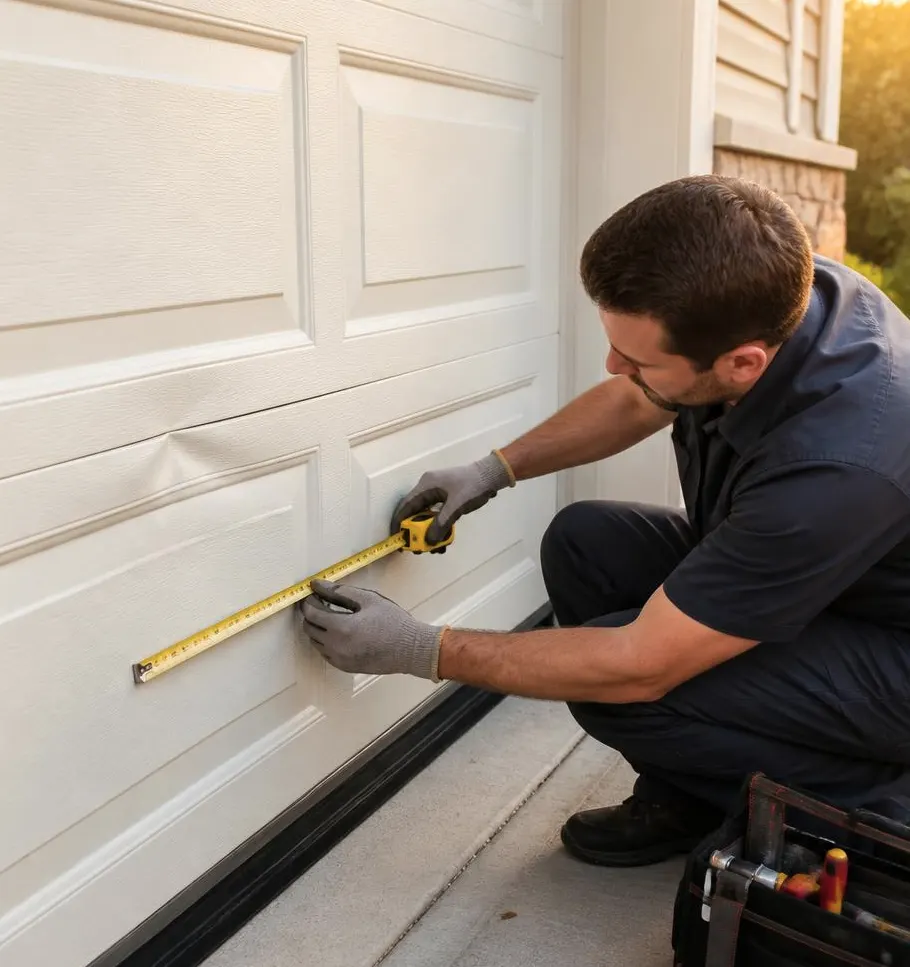
What a Service Call Looks Like After a Break-In Attempt
When a technician gets called out after an attempted break-in, the garage usually tells the whole story before the homeowner even finishes explaining. There's a bent bracket near the emergency release cord, a scraped-up spot on the track where a pry bar caught, or a section of weatherstripping torn loose from someone fishing a wire hanger through the top seal. Sometimes the door itself is fine, but the opener's old enough that the code could've been grabbed with a cheap scanner. None of this takes much skill. It takes about thirty seconds and a door that wasn't set up to resist it.
How It Actually Happens
The Coat-Hanger-and-Fishing-Wire Trick
Plenty of older doors in this area still have a standard emergency release cord hanging from the trolley, with just a thin rubber seal between the top of the door and the frame. Someone slides a wire or a bent coat hanger through that gap, hooks the release cord, and pulls. The door disengages from the opener and can be lifted by hand. It's quiet, it's fast, and it leaves almost no damage - which is exactly why it's a favorite.
Prying the Bottom Corner
On doors with worn or missing bottom seals, a flat bar can get enough purchase to flex the panel and pop it off the track, especially on older steel doors that have softened at the corners from years of freeze-thaw cycling. Rochester's winters are hard on hardware - salt spray from plowed roads, ice buildup on tracks, and repeated expansion and contraction all weaken the metal over time, making an already-old door easier to force.
Code-Grabbing on Older Openers
Openers from the 1990s and early 2000s often used fixed codes instead of rolling codes. A fixed code can be captured with inexpensive electronics and replayed later. If your opener still uses a dial-switch remote or you're not sure how old it is, this is worth checking.
The Unlocked Interior Door
Even when the garage door itself holds, a lot of attached homes here have an interior door between the garage and the house that's a standard hollow-core door with a basic knob lock - sometimes not locked at all, since people assume the garage door is the only barrier. Once someone's inside the garage, that door is often the weakest point in the whole house.
Habits That Actually Stop It
- Shield the emergency release. A simple guard or shield kit blocks the fishing-wire trick without affecting how the release works in an actual power outage.
- Keep seals and bottom weatherstripping tight. Beyond keeping out drafts and meltwater, a snug seal removes the gap a pry bar needs to get started.
- Lock the interior door like it's an exterior door. Deadbolt, solid core if you can swing it, and treat the code to your garage opener app the same way you'd treat a house key.
- Upgrade old fixed-code openers to rolling code. This is a one-time fix that closes off code-grabbing permanently.
- Don't leave the door cracked for ventilation. It's tempting to leave the door up a few inches while running a snowblower or warming up a car on a cold morning, but a partially open door is an easy invitation. Run a fan or crack a side window instead.
- Use vacation or lockout mode on the opener when you're away for more than a day or two, so the remote and keypad are disabled entirely.
- Light the area. Motion-activated lighting over the garage door removes the cover of darkness that most of these attempts rely on.
When the Door Itself Is the Problem
Sometimes the real issue isn't a break-in technique at all - it's that the door and opener are old enough, or worn enough from years of NH winters, that they're easy to defeat no matter what habits you adopt. Bent tracks, a soft bottom panel, or an opener with no rolling code all point to hardware that's past its useful life for security purposes, even if it still opens and closes fine day to day.
When to Call Rochester Garage Door Pro
If your emergency release isn't shielded, your opener predates rolling-code technology, or your door shows pry damage or soft spots at the corners, it's worth having it looked at before it becomes an actual break-in instead of a near-miss. We handle Garage Door Opener Repair & Installation for homes still running older fixed-code units, and Garage Door Maintenance visits to catch track damage, worn seals, and weak panels before winter ice and salt make them worse. We'll walk the whole setup with you and tell you plainly what's a quick fix and what's worth replacing.
If you're in Rochester, Dover, Somersworth, Farmington, Barrington, Milton, Strafford, or Wakefield and want your garage door checked over before winter sets in, give Rochester Garage Door Pro a call - we'll get it locked down right.